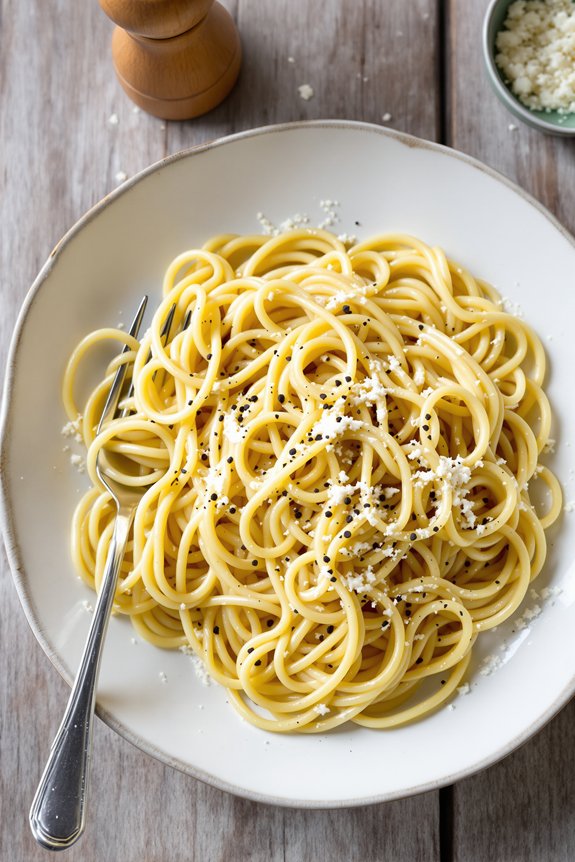
Why You’ll Love this Creamy Cacio e Pepe
Because this dish manages to taste incredibly luxurious while using just a handful of ingredients you probably already have in your pantry, it’s basically the weeknight dinner equivalent of finding money in your coat pocket.
I’m talking pasta, butter, cheese, and pepper. That’s it. No cream, no complicated techniques, no fancy equipment.
Yet somehow it transforms into this silky, peppery, utterly craveable situation that makes you look like you’ve been secretly attending culinary school.
It’s the kind of recipe that feels like cheating, honestly, because the effort-to-impressed-dinner-guests ratio is completely off the charts.
What Ingredients are in Creamy Cacio e Pepe?
The ingredient list for cacio e pepe is so short it’s almost suspicious, like someone forgot to finish writing the recipe. But that’s the entire point, the magic of Italian cooking where you’re not hiding behind a dozen ingredients but instead letting each one really shine.
We’re working with pasta, butter, olive oil, pecorino romano cheese, and black pepper. That’s the whole gang. No supporting cast, no understudies waiting in the wings.
Here’s what you need:
- 12 ounces spaghetti
- 4 tablespoons unsalted butter, at room temperature
- 1 tablespoon extra-virgin olive oil
- 2/3 cup grated pecorino romano cheese
- Salt, to taste
- Fresh ground black pepper, to taste (and we’re talking generous amounts here)
Now, a few things worth mentioning because not all ingredients are created equal, even in a simple recipe like this.
The pecorino romano needs to be freshly grated, not the sad dusty stuff from a green can that tastes vaguely of feet and regret. Get a wedge of the real deal and grate it yourself, because pre-grated cheese has anti-caking agents that will absolutely sabotage your sauce and leave you with a clumpy mess instead of silky pasta perfection.
The black pepper should be freshly cracked too, since this is basically a pepper showcase and you want that sharp, aromatic bite, not the stale powder that’s been sitting in your spice rack since 2019.
And make sure that butter is actually soft, like room temperature soft, because you’ll be mashing it into a paste and cold butter will just laugh at your attempts to cooperate.
Recommended Products


Nordic Ware Natural Aluminum Commercial Baker\'s Half Sheet Pan with Cooling Rack Set
Nordic Ware baking sheet - Half sheet pan
VIEW LATEST PRICEHow to Make this Creamy Cacio e Pepe

Get your largest pot filled with generously salted water and bring it to a rolling boil, then toss in your 12 ounces of spaghetti. You’re aiming for al dente here, which should take about 8 to 10 minutes, but honestly, start checking a minute or two early because pasta boxes lie sometimes and nobody wants mushy noodles.
While those strands are doing their thing in the bubbling water, you’ve got a vital job at your station: grab a large bowl and start mashing together 4 tablespoons of that room-temperature butter with 1 tablespoon of extra-virgin olive oil and 2/3 cup of your freshly grated pecorino romano. You’re basically making a thick, chunky paste situation here, and it might feel weird at first, like you’re doing something wrong, but stick with it. This paste is what’s going to transform into that glossy, clingy sauce that makes cacio e pepe worth obsessing over.
Here’s where timing matters and you can’t wander off to check your phone. Before you drain that pasta, scoop out about ½ cup of the starchy cooking water and set it aside like it’s liquid gold, because it basically is.
Drain the spaghetti and immediately dump it right into that bowl with your butter-cheese paste. Now comes the tossing, the mixing, the moment where you channel your inner Italian grandmother even if you’ve never met her. Work quickly, tossing and stirring the pasta through that paste, and start adding splashes of that reserved pasta water bit by bit. The starch in that water is what helps everything come together into a thick, creamy sauce that actually clings to each strand instead of pooling sadly at the bottom of the bowl.
Once you’ve got a glossy, cohesive sauce coating every piece of pasta, hit it with salt to taste and then go absolutely wild with the freshly ground black pepper. We’re talking way more than you think is reasonable, because this is cacio e pepe and pepper is literally in the name. Having a quality professional chef knife set makes all the difference when you’re preparing fresh ingredients and grating cheese for dishes like this.
Give everything one final toss, divide it among four plates, and get it to the table immediately because this dish waits for no one. The sauce will start to thicken and tighten as it sits, so you want to catch it in that perfect creamy window when it’s just right.
Recommended Products

Wusthof Classic 10-inch Carving Knife
Wusthof carving knife - Professional carving knife
VIEW LATEST PRICE
Victorinox 8-Inch Fibrox Pro Chef\'s Knife
Victorinox chef knife - Professional chef knife
VIEW LATEST PRICE
Victorinox Swiss Army 12-Inch Granton Blade Slicing Carving Knife
Victorinox slicing knife - Meat carving knife
VIEW LATEST PRICECreamy Cacio e Pepe Substitutions and Variations
Look, I get it, sometimes you don’t have pecorino romano sitting in your fridge, or maybe you’re one of those people who thinks black pepper tastes like spicy dirt, or perhaps you just want to mess around with a classic because that’s how you roll.
Swap pecorino for parmesan if you need something milder, though you’ll lose that signature tang. Not into the pepper assault? Use less, but honestly, what’s the point?
Want to bulk it up? Toss in some peas, crispy pancetta, or sautéed mushrooms. You can also try different pasta shapes; bucatini works beautifully here.
What to Serve with Creamy Cacio e Pepe
Since cacio e pepe is rich, intensely cheesy, and honestly a bit heavy if we’re being real, you’ll want something on the side that cuts through all that creamy, peppery goodness without competing for attention.
I always reach for a crisp arugula salad with lemon vinaigrette, because the peppery greens mirror the black pepper in the pasta while that sharp citrus cuts the fat beautifully.
Roasted broccoli or blistered green beans work too, anything with a bit of char and brightness.
Even a simple tomato salad with good olive oil does the trick, bringing acidity that makes every bite feel less like you’re eating butter soup.
Final Thoughts
If you’ve never made cacio e pepe before, I won’t lie to you, there’s a decent chance your first attempt turns into clumpy cheese disaster instead of silky pasta perfection.
But here’s the thing: even imperfect cacio e pepe tastes pretty darn good. You’ve got butter, cheese, and carbs working together, so how bad can it really be?
The key is keeping everything hot, working quickly, and not panicking when the sauce looks weird at first.
Give it a few practice runs, and you’ll nail that creamy, peppery sauce that makes this dish so legendary.