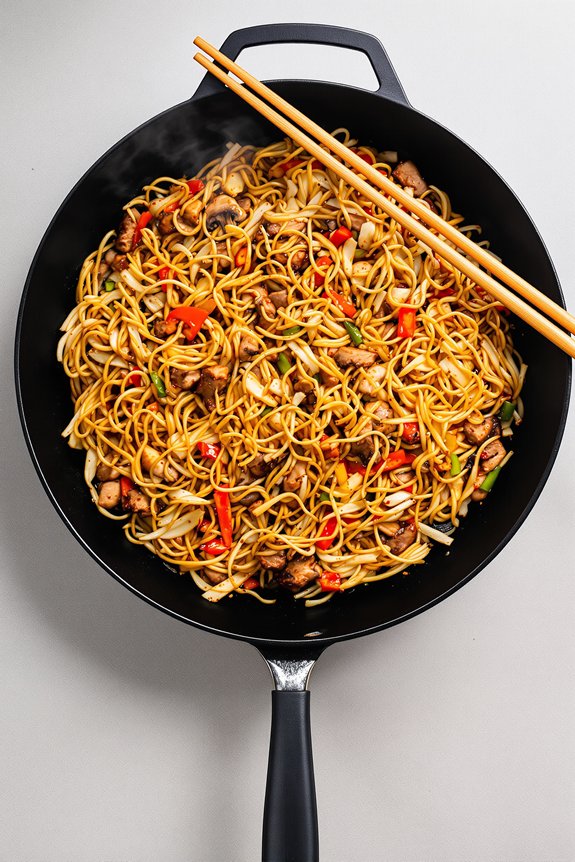
Why You’ll Love this Savory Homemade Chow Mein
When you’re craving takeout but your wallet is giving you the side-eye, this homemade chow mein swoops in like a culinary superhero.
I’m talking restaurant-quality noodles without the guilt of spending twenty bucks on what’s basically cabbage and carbs. You control everything here: the vegetable crunch, the soy sauce intensity, the meat-to-noodle ratio that always feels stingy in delivery containers.
Plus, you can raid your fridge for those lonely peppers and mushrooms before they turn into science experiments. It’s faster than waiting for delivery, cheaper than drive-thru, and honestly tastes better because you made it with your own two hands.
What Ingredients are in Savory Homemade Chow Mein?
The beauty of chow mein is that it’s basically a blueprint for using whatever’s hanging out in your kitchen, but you still need the core players to make it sing. We’re talking about a protein situation, some vegetables that’ll give you crunch and color, those squiggly noodles that make it actually chow mein, and the saucy components that tie everything together.
Nothing too precious here, nothing you need to hunt down at some specialty store three towns over, just solid ingredients that transform into something way better than their individual parts.
Here’s what you’ll need:
- 1 lb pork stew meat or 2 1/2 cups cut up chicken meat
- 1 1/2 teaspoons seasoning salt
- 1 medium onion, chopped
- 1-2 garlic cloves
- 1 cup celery, chopped
- 3/4 cup red, yellow, and orange peppers, chopped (you can use all three or stick with one color)
- 5 mixed mushrooms
- 1/2 cup bamboo shoots
- 3 cups white cabbage, thinly sliced
- 0.5 (14 ounce) bag chow mein noodles
- 3 tablespoons soy sauce
- Salt and pepper to taste
- Margarine or oil for frying
Now, about those ingredient choices. The protein is totally flexible, so if you’re team chicken or team pork, you’re covered either way.
Those mixed mushrooms can be whatever looks good at the store, whether that’s shiitake, button, or those fancy ones with names you can’t pronounce. The pepper situation is forgiving too, because honestly, who’s all three colors just sitting around unless you’re meal prepping for a cooking show?
One color works fine, or mix whatever’s in your crisper drawer. And if you can’t find chow mein noodles specifically, lo mein noodles or even spaghetti in a pinch will get you close enough, though the texture purists might give you grief about it.
How to Make this Savory Homemade Chow Mein

Getting this chow mein situation started means heating up your frying pan with some margarine or oil, whatever you’ve got that’ll keep things from sticking, and tossing in that 1 lb of pork stew meat or 2 1/2 cups of cut-up chicken.
Season it right away with the 1 1/2 teaspoons of seasoning salt because nobody wants bland protein, and let it get some color on it. Once the meat’s looking good and mostly cooked through, throw in your 1 medium chopped onion and those 1-2 garlic cloves, letting them fry for about 2 minutes until your kitchen smells like you actually know what you’re doing.
Then comes the vegetable parade, all the 1 cup of chopped celery, the 3/4 cup of those colorful peppers, your 5 mixed mushrooms, 1/2 cup of bamboo shoots, and those 3 cups of thinly sliced white cabbage. Just dump it all in there and sauté everything until the vegetables get soft but not mushy, because nobody signed up for vegetable mush.
While that’s happening in the frying pan, you need to get a separate pot going for the 0.5 bag of chow mein noodles, which sounds like you’re doing two things at once and maybe you are, but it’s not complicated multitasking, just boiling water with some salt in it.
Here’s where the recipe writer gets real with us though, they specifically say don’t follow the package directions because those instructions will leave you with soggy disappointment noodles. Instead, boil them for approximately 4 minutes, just enough to get them tender but still with some backbone.
Drain those noodles, give them a rinse with hot water so they don’t clump into one giant noodle blob, then add them straight to the frying pan with all that meat and vegetable action. Pour in the 3 tablespoons of soy sauce, toss everything together until the noodles get coated in all that flavor, then taste it and add whatever salt and pepper your soul needs.
If you’re regularly preparing ground meat for dishes like this, investing in a premium meat grinder can elevate your kitchen setup and give you better control over your ingredients. That’s it, that’s the whole thing, and somehow it transforms into this complete meal that looks way more impressive than the effort you actually put in.
Savory Homemade Chow Mein Substitutions and Variations
Look, nobody’s saying you need to follow this recipe like it’s some sacred culinary text, because chow mein is actually one of those dishes that basically begs you to raid your fridge and throw in whatever’s hanging out in there.
Got shrimp instead of pork? Perfect. Prefer beef, or maybe you’re going full vegetarian? Absolutely works. I swap regular cabbage for napa when I’m feeling fancy, toss in snow peas, broccoli, whatever vegetables are calling my name.
You can even use spaghetti if you’re desperate, though I won’t tell anyone if you don’t.
What to Serve with Savory Homemade Chow Mein
Honestly, chow mein is kind of a main dish superhero because it doesn’t really need much backup, but that doesn’t mean you can’t make the meal feel more complete with a few tactical side dishes.
I’m thinking crispy egg rolls, obviously, or some tangy cucumber salad to cut through all that savory goodness. Spring rolls work too, especially if you’re feeding people who claim they’re “not that hungry” but somehow devour everything anyway.
Want something lighter? Try edamame with sea salt or a simple hot and sour soup.
Sometimes I’ll add pot stickers because, well, why not.
Final Thoughts
When you break it down, making chow mein at home is really just about getting comfortable with high heat, quick moves, and trusting that everything comes together in that final toss.
I promise you’ll mess up the timing once or twice, maybe oversoak those noodles or underseason the pork, but that’s how you learn what works in your kitchen.
The beauty here is flexibility. Swap the vegetables, use what’s wilting in your crisper drawer, adjust the soy sauce until it tastes right to you.
There’s no chow mein police coming to check your technique.