Why You’ll Love this Family Filet Mignon
Look, I get it—beef isn’t exactly budget-friendly, and most of us aren’t serving up steaks every Tuesday night.
But when you need something that screams “special occasion,” this filet mignon delivers without requiring a culinary degree.
We’re talking melt-in-your-mouth tender, the kind of meat that makes people think you hired a private chef.
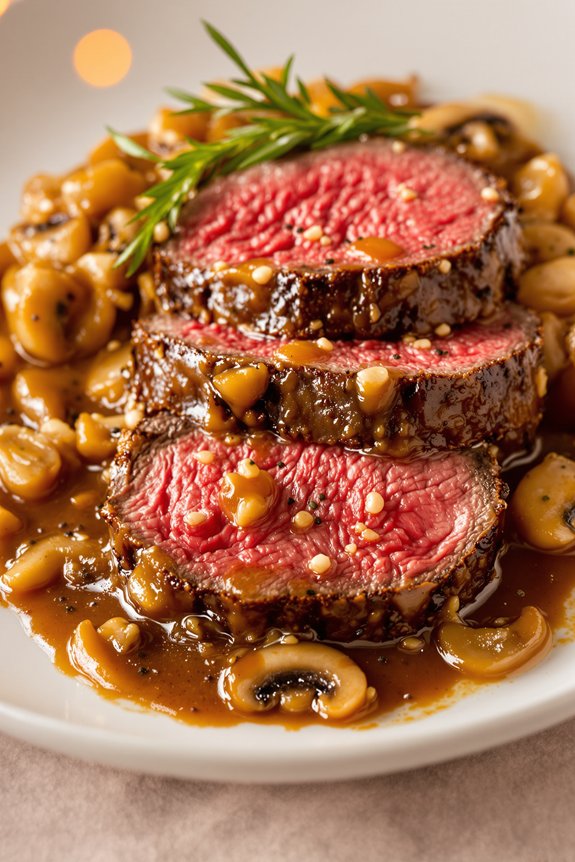
The mushroom-vermouth sauce? It’s deceptively simple but tastes restaurant-fancy.
Plus, you can prep most of it ahead, which means less sweating in the kitchen while your guests wonder where you disappeared to.
Worth every penny.
What Ingredients are in Family Filet Mignon?
The beauty of this recipe is that it doesn’t demand a scavenger hunt through specialty stores or some weird ingredient you’ll use once and then watch languish in your pantry for three years.
We’re working with good, straightforward stuff that lets the star of the show—that gorgeous piece of beef—shine. You’ll need the filet itself, obviously, plus some basics for seasoning and a handful of ingredients for that mushroom sauce that honestly does all the heavy lifting in the flavor department.
For the Filet:
- 1 whole filet mignon (about 5½ pounds)
- Olive oil (or your preferred cooking oil)
- Salt and pepper
- Optional seasonings: paprika, crushed garlic, Montreal Steak Seasoning, or Dijon mustard with crushed peppercorns
For the Mushroom Sauce:
- 2 boxes (10 ounces each) fresh white mushrooms, sliced
- 1 large onion, sliced
- 3-4 tablespoons oil or butter
- ½ cup sweet vermouth or sherry wine
- 1 clove garlic, crushed
- Salt and pepper to taste
- A dash of Worcestershire sauce
- Optional: pan drippings from the roast, Gravy Master for color, or beef bouillon paste
Now, about that filet. Try to buy one that’s already trimmed—sometimes labeled as “peeled”—which means someone else dealt with removing all that silverskin and extra fat.
Sure, you can do it yourself if you’re feeling ambitious or want to save a few bucks, but we’re going for ease here, remember? The mushrooms should be fresh, not canned, because canned mushrooms have that weird, rubbery texture that just won’t cut it for a special dinner.
And vermouth versus sherry? Either works beautifully, so grab whatever you’ve got or whatever’s on sale. This isn’t the time to stress about wine snobbery.
Recommended Products


Le Creuset Stoneware Rectangular Platter 14.75-inch
Le Creuset platter - Stoneware serving platter
VIEW LATEST PRICE
How to Make this Family Filet Mignon
The first thing you need to do—and I mean absolutely need to do—is let that 5½-pound filet mignon come to room temperature before it goes anywhere near your oven. This isn’t some fussy chef thing, this is science. Cold meat cooks unevenly, and we’re not spending this kind of money on beef just to end up with a roast that’s perfect on the outside and still learning its ABCs in the middle.
While it’s sitting there getting cozy with your kitchen temperature, deal with the shape situation. That whole filet has a tapered end called the tail, and if you just plop it in the pan as-is, that skinny part will cook faster than everything else. So tuck it under, fold it back on itself, maybe tie it with kitchen twine if you’re feeling fancy. If the thing is too massive for your roasting pan—which, honestly, it might be—just cut it in half and roast both pieces side by side. Nobody’s judging.
Now for the fun part, the part where you get to play and pretend you know what you’re doing. Rub that filet all over with olive oil, get your hands in there, make sure every inch is coated. Then hit it with your seasonings. The recipe suggests salt, pepper, paprika, and crushed garlic, or you could go with Montreal Steak Seasoning if you want to keep things simple and let someone else do the spice-blend thinking for you.
Some people, the really adventurous types, coat the whole thing in Dijon mustard first and then roll it in crushed peppercorns, which sounds intimidating but is actually just rolling meat around in stuff, so don’t overthink it. Either way works, both are delicious, pick your path and commit.
Place your seasoned filet on a roasting rack set over a roasting pan, or if you happen to have some beef bones lying around—which, who does, but if you do—you can use those as a makeshift rack. Preheat your oven to a scorching 475 degrees F, slide that pan in, and roast for 20 minutes.
Then, and this is important, drop the temperature down to 350 degrees F and give it another 20 minutes or so. This double-temperature method is what gives you that gorgeous crust on the outside while keeping the inside tender and pink. For a 5-pound roast, this timing should land you right in medium-rare territory, but if your roast is bigger or smaller, adjust accordingly.
Or better yet, just use a meat thermometer and take the guesswork out of it entirely. You’re aiming for 120-130 degrees F for rare, 130-140 degrees F for medium-rare, stuck right into the thickest part of the meat.
While the filet is doing its thing in the oven, you’ve got time to make that mushroom sauce, which is where this whole recipe really earns its keep. Heat up 3-4 tablespoons of oil or butter in a large skillet over medium-high heat, toss in your sliced large onion, and cook until it’s soft and starting to smell amazing.
Add those 2 boxes of sliced fresh white mushrooms along with 1 clove of crushed garlic, and keep stirring until the mushrooms shrink down to about half their original size and get all tender and golden. Pour in ½ cup of sweet vermouth or sherry wine, add a few dashes of Worcestershire sauce, and if you want that sauce to look really fancy and deeply colored, throw in a bit of Gravy Master.
Let everything bubble and reduce for another 5 to 10 minutes, then taste it and add salt and pepper as needed. If you want to go full decadence mode, you can stir in a few spoonfuls of those pan drippings from the roast or a dab of beef bouillon paste from a jar.
When your filet comes out of the oven, don’t you dare slice into it right away. Let it rest for about 15 minutes so the juices can redistribute and you don’t end up with a puddle of red liquid all over your cutting board.
Then slice, however thick or thin you like, drizzle that mushroom sauce over the top, and try not to look too smug about what you just pulled off. If you find yourself preparing beef cuts like this regularly, investing in a premium commercial meat grinder can help you elevate your kitchen capabilities and tackle even more ambitious recipes.
Recommended Products

OXO Good Grips 3-Piece Wooden Salad Bowl and Servers Set
Large wooden salad bowl - OXO salad bowl servers
VIEW LATEST PRICE
Bellemain Stainless Steel Wire Ladle 2-Ounce and 6-Ounce Set
Stainless steel ladle - Soup ladle set
VIEW LATEST PRICEFamily Filet Mignon Substitutions and Variations
So you’ve got the technique down, you know how to roast this thing, but maybe you’re staring at your spice cabinet thinking the options in the recipe sound a little boring, or maybe you don’t have vermouth and you’re wondering if the mushroom sauce police are going to show up at your door.
First, relax. Swap vermouth for Marsala, red wine, or even beef broth with a splash of balsamic.
The Dijon-peppercorn crust I mentioned earlier? That’s fancy restaurant territory.
Or keep it simple with garlic powder and rosemary. Want cremini mushrooms instead of white? Go wild. This isn’t science class.
What to Serve with Family Filet Mignon
Look, you didn’t just spend an hour’s wages on a single cut of meat to serve it with sad steamed broccoli and instant mashed potatoes from a box.
I’m thinking roasted asparagus with garlic butter, creamy au gratin potatoes that bubble at the edges, or maybe a Caesar salad with actual parmesan shavings, not the dusty stuff.
Some crusty bread for soaking up that mushroom sauce? Absolutely.
A simple arugula salad with lemon vinaigrette cuts through the richness nicely.
Keep the sides elegant but unfussy, because the star here is obviously that perfectly pink, tender beef sitting center stage.
Final Thoughts
When you’re spending this kind of money on a single piece of beef, honestly, there’s no room for half-measures in the kitchen.
This means reading that thermometer, letting the meat rest properly, and not panicking when you slice into it.
I’m telling you right now, if you follow these steps—the room temperature thing, the two-stage roasting, the actual resting period—you’ll serve something worth remembering.
Will it be perfect your first attempt? Maybe not, but that’s what makes special occasions, well, special.
You’re creating moments, not just dinner.