Why You’ll Love these Homemade Pierogi
There’s something deeply satisfying about making pierogi from scratch, even though I’ll be honest with you, it’s a bit of a project.
But here’s why I’m obsessed: you get that perfect chewy-tender dumpling texture that store-bought versions just can’t match. The filling possibilities? Endless. This beef and sauerkraut combo hits different, especially when you’re craving something hearty and comforting.
Plus, once you master the dough, you’ll feel like an actual Eastern European grandmother. Which is powerful.
And let’s talk about how they freeze beautifully, so future-you gets dinner without the work.
What Ingredients are in Homemade Pierogi?
The ingredient list for homemade pierogi is surprisingly short, which feels like a small miracle when you’re staring down a recipe that requires this much hand work.
You’ve got your basic dough situation, your filling components, and then some extras for finishing. Nothing exotic, nothing you need to hunt down at specialty stores, which means you can decide to make these on a random Tuesday without a special grocery trip.
For the Dough:
- 3 cups all-purpose flour
- 2 eggs
- 1 cup sour cream
- 1/2 teaspoon salt
For the Filling:
- 16 ounces ground beef, browned
- 16 ounces sauerkraut, drained but not rinsed
- Sour cream (enough to bind the mixture)
- Salt and pepper, to taste
For Serving:
- Butter
- Additional sour cream (optional)
- Salt and pepper
Now here’s the thing about these ingredients, they’re deceptively simple but each one matters.
The sour cream in the dough is what gives you that tender, slightly tangy bite, so don’t try to swap it for milk or water thinking you’re being clever.
For the filling, make sure those amounts of beef and sauerkraut are equal, even if you eyeball it a bit, because the balance is what makes this work.
And that sauerkraut? Don’t rinse it. You want that briney flavor hanging around to cut through the richness of the beef.
The butter at the end isn’t optional either, unless you want sad, naked pierogi, which nobody deserves.
How to Make these Homemade Pierogi

Making pierogi is one of those projects where you commit to getting your hands involved, and I mean really involved, because this dough is going to test your relationship with the concept of “sticky.” Start by combining your 3 cups all-purpose flour, 2 eggs, 1 cup sour cream, and 1/2 teaspoon salt in a large bowl, mixing everything together until it comes together into what can generously be called a shaggy mess.
Then comes the fun part, ten full minutes of kneading, which sounds like forever but is actually kind of meditative once you accept your fate. The dough will stay sticky, stubbornly so, which is why you’ll want to flour your work surface like you’re creating a small snowdrift. Once it’s kneaded, roll that dough out to about 1/16 inch thick, roughly the thickness of a dime, and cut out circles using something like a coffee mug as your guide. You’re looking for uniform rounds that’ll hold your filling without turning into pierogi soup when you seal them up.
While you’re recovering from all that rolling, make your filling by mixing together equal amounts of 16 ounces browned ground beef and 16 ounces drained sauerkraut, then add enough sour cream to bind everything together so it’s cohesive but not soupy. Season the whole thing with salt and pepper until it tastes right to you, remembering that the sauerkraut already brings some salt and tang to the party.
Now comes the assembly line portion of the program, where you’ll place about 1 tablespoon of filling on one side of each dough circle, fold it over like you’re making a little half-moon, and pinch those edges together firmly. You can use the tines of a fork to really seal the deal, but be gentle because puncturing the dough at this stage means you’ve just created a filling leak situation that nobody wants to deal with during boiling.
Get a very large stockpot of salted water going at a rapid boil, the kind of boil that means business, and drop in several pierogi at a time without crowding them. They’ll sink at first, which is normal and not a sign that you’ve failed at cooking, and then they’ll float to the surface when they’re done, which should take anywhere from 5 to 12 minutes depending on how big you made them.
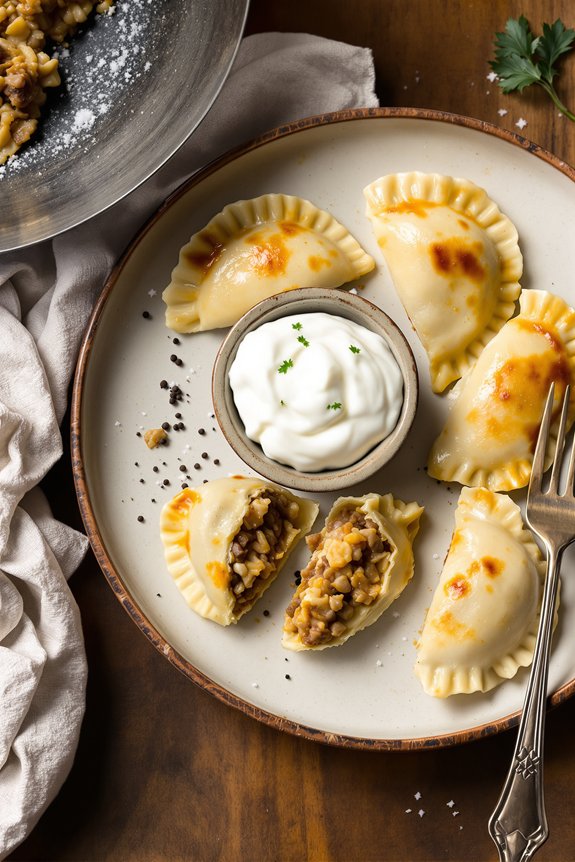
Keep going in batches until you’ve cooked all of them, then drain the whole lot and immediately toss them with butter while they’re still hot so every pierogi gets its glossy coat. If you want to take your pierogi to the next level, consider finishing them in a carbon steel wok for a quick sear that adds a delicious crispy texture to the buttery surface. Hit them with more salt and pepper if they need it, serve with additional sour cream on the side, and try not to eat them all straight from the pot before they make it to the table.
Homemade Pierogi Substitutions and Variations
Why stick to just one filling when pierogi dough is basically a blank canvas that’ll happily wrap itself around whatever you want to stuff inside it?
Sure, I’m giving you beef and sauerkraut here, but you can swap that ground beef for turkey, pork, or even skip the meat entirely.
Mashed potatoes mixed with sharp cheddar? Classic.
Mushrooms and onions? Vegetarian perfection.
Sweet cheese filling with a drizzle of honey? Now we’re talking dessert pierogi.
You can even toss in leftover pulled pork if that’s what your fridge is offering.
The dough doesn’t judge.
What to Serve with Homemade Pierogi
Once you’ve got your pierogi situation handled, you’re probably staring at a plate full of those plump little dumplings wondering what else goes on the table, because let’s be honest, serving just pierogi feels a bit like showing up to a party in only your socks.
I reach for simple sides that won’t compete. A crisp cucumber salad with dill and vinegar cuts through all that buttery richness beautifully.
Caramelized onions are non-negotiable, obviously. Some people go wild with kielbasa, which, fair.
A dollop of applesauce on the side adds this sweet-tart thing that somehow just works.
Final Thoughts
Look, pierogi aren’t going to win any awards for being quick weeknight dinner material, and I’d be lying if I said rolling out dough to the thickness of a dime doesn’t make me question my life choices at least once per batch.
But here’s the thing: that first bite of tender dough wrapped around savory beef and tangy sauerkraut, topped with a dollop of sour cream? Worth every flour-covered surface in your kitchen.
These dumplings represent comfort food at its finest, the kind that makes you slow down and actually enjoy the process of cooking.