

Why You’ll Love this Coconut-Braised Salmon
If you’ve been stuck in a chicken-and-rice rut, this coconut-braised salmon is about to become your new weeknight hero.
I’m talking tender, flaky fish swimming in a sauce that’s equal parts creamy, citrusy, and just spicy enough to keep things interesting.
The best part? It’s all done in one skillet in under 15 minutes, which means less time scrubbing pans and more time actually enjoying dinner.
Plus, you’ll look like you spent hours on this dish when really, you just tossed everything together and let it simmer while you scrolled through your phone.
What Ingredients are in Coconut-Braised Salmon?
Look, this isn’t one of those recipes where you need to hunt down some obscure ingredient that’s only sold at one specialty shop across town. Most of what you need is probably already hanging out in your pantry or fridge right now, and if not, everything’s easy to grab on a regular grocery run.
The ingredient list is surprisingly short for something that tastes this impressive, which honestly feels like cheating in the best possible way.
Here’s what you’ll need:
- 1 cup unsweetened coconut milk
- 1/3 cup orange juice
- 1 teaspoon grated orange zest
- 2 tablespoons Thai fish sauce
- 1 to 3 teaspoons Asian chili sauce (depending on your spice tolerance)
- 1 garlic clove, minced
- 2 tablespoons minced fresh ginger
- 2 tablespoons chopped fresh mint
- 2 tablespoons chopped fresh cilantro stems
- 4 (6-inch) salmon fillets, skinned with pin bones removed
Now, a couple things worth mentioning here. First, make sure you’re grabbing unsweetened coconut milk, not the sweetened stuff meant for piña coladas, because trust me, that’s a whole different vibe.
The chili sauce range from 1 to 3 teaspoons gives you control over the heat level, so start with less if you’re not sure how spicy you like things. You can always add more, but you can’t take it back once it’s in there.
And about those fresh herbs? Yeah, they really do make a difference here, so skip the dried stuff if you can. Fresh ginger matters too, since the jarred minced version just doesn’t have that same punchy brightness.
If your salmon still has skin or those annoying little pin bones, just ask the folks at the fish counter to deal with it, or grab a pair of tweezers and do a quick once-over yourself.
How to Make this Coconut-Braised Salmon
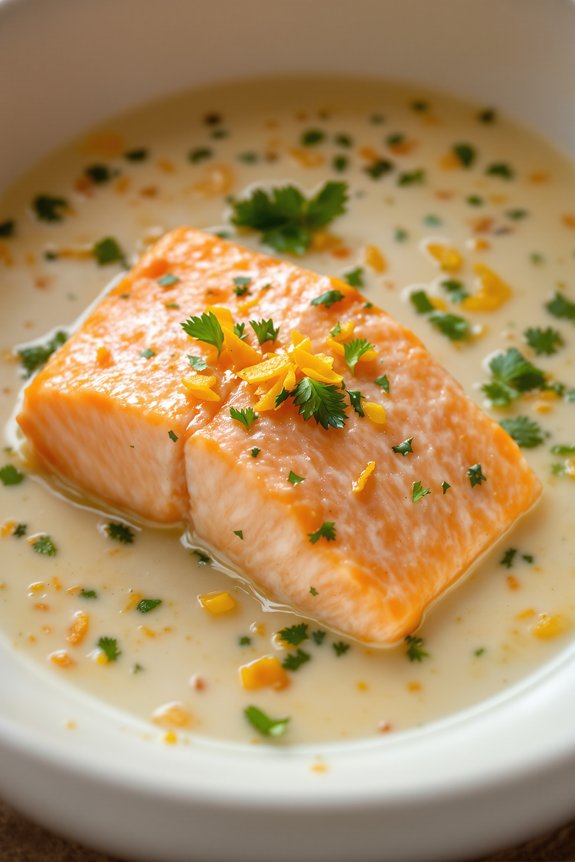
This is honestly one of those dishes where the actual cooking part feels almost too easy, like you’re getting away with something. Start by grabbing a large skillet that’s big enough to hold all four salmon fillets without cramming them in there like sardines.
Into that skillet, dump your 1 cup of unsweetened coconut milk, 1/3 cup of orange juice, 1 teaspoon of grated orange zest, 2 tablespoons of Thai fish sauce, your chosen amount of Asian chili sauce (remember, anywhere from 1 to 3 teaspoons), 1 minced garlic clove, 2 tablespoons of minced fresh ginger, 2 tablespoons of chopped fresh mint, and 2 tablespoons of chopped fresh cilantro stems. Give everything a good mix until it’s all combined and looking like this creamy, aromatic liquid that already smells better than most restaurants.
Now comes the part where you nestle those 4 salmon fillets into the mixture, making sure they’re actually submerged in the liquid. If they’re sitting there half-exposed like little fish islands, you’ll need to add more liquid, equal parts coconut milk and orange juice, until they’re covered.
Place the whole situation over medium heat and bring it to a very low simmer, which basically means you want to see just a few lazy bubbles breaking the surface, nothing crazy. Once you hit that point, slap a lid on the pan, crank the heat down to low, and let it cook for 6 to 8 minutes. If your fish isn’t fully submerged (which happens sometimes depending on your skillet), flip those fillets over after about 5 minutes so both sides get their time in the braising liquid.
After the initial cooking time, grab a fork and gently poke at one of the fillets to see if it flakes easily. If it does, you’re golden and ready to plate. If it’s still holding together a bit too firmly, cover the pan again and give it another 2 minutes.
When everything’s cooked through, carefully lift each fillet out of the pan and onto your dinner plates, then spoon that gorgeous sauce all around the sides. The whole thing should feel kind of fancy even though you basically just let the fish hang out in flavored coconut milk for a few minutes, which, if you ask me, is exactly the kind of cooking I can get behind. A good stainless steel skillet makes this whole braising process even easier since it distributes heat evenly and won’t react with the acidic orange juice.
Coconut-Braised Salmon Substitutions and Variations
What works particularly well about this recipe is how forgiving it’s when it comes to swapping ingredients, which means you’re not stuck running to three different stores just because you can’t find fresh mint on a Tuesday.
Can’t find cilantro? Basil works. No fish sauce? Soy sauce gets you halfway there. You can swap the salmon for cod, halibut, or even thick tilapia fillets—just adjust your cooking time accordingly.
Want more heat? Double that chili sauce. Prefer lime over orange? Go for it. The coconut milk base is your safety net, holding everything together beautifully.
What to Serve with Coconut-Braised Salmon
How do you make sure this fragrant, saucy fish doesn’t end up looking lonely on the plate? I always reach for jasmine rice first—it soaks up that coconut-orange sauce like a dream.
Steamed bok choy or snap peas add color and crunch without competing with the star. Sometimes I’ll toss together a quick cucumber salad with rice vinegar and sesame seeds for brightness.
If I’m feeling ambitious, which honestly isn’t often, coconut rice makes everything feel extra special. The key is keeping sides simple so they complement rather than crowd.
Let the salmon shine, you know?
Final Thoughts
Looking at this recipe now, with all its moving parts laid out, I can’t help but feel like it’s one of those dishes that tricks people into thinking they’re fancier cooks than they actually are.
You’re basically just dumping everything in a pan and waiting. That’s it. No complicated techniques, no sweating over timing.
Yet somehow you end up with this restaurant-worthy meal that makes your kitchen smell like a Thai bistro. The coconut milk does all the heavy lifting while you stand there looking accomplished.
It’s almost embarrassing how easy it is.


