Why You’ll Love these Authentic Venezuelan Arepas
Because these arepas are ridiculously versatile, you’re basically getting a blank canvas that tastes amazing all on its own.
I mean, where else can you stuff literally anything between two crispy-outside, fluffy-inside corn pockets? Cheese for breakfast, shredded beef for lunch, avocado and eggs for dinner—honestly, the possibilities make my head spin in the best way.
Plus, they’re naturally gluten-free, which means more people at your table can actually enjoy them.
And here’s the thing: you only need three ingredients to make the dough. Three. That’s fewer than most pancake recipes, and way more impressive.
What Ingredients are in Authentic Venezuelan Arepas?
I’m about to make your life so much easier, because authentic Venezuelan arepas require exactly three ingredients for the dough. That’s it. No fancy pantry items, no hunting through specialty stores for some obscure ingredient that costs more than your monthly coffee budget.
Just three simple things that come together to create these incredible corn cakes that’ll have everyone asking for seconds, thirds, and honestly probably fourths.
For the Arepa Dough:
- 3 cups cornflour (Harina Pan)
- 4 cups water (lukewarm or cold)
- 1 teaspoon salt
Now, here’s where people sometimes get tripped up—and listen, I’m going to save you from making the mistake that’ll turn your arepas into hockey pucks.
You absolutely need to use Harina Pan or another pre-cooked cornmeal specifically made for arepas. Regular cornmeal from the baking aisle won’t work, and trust me, corn flour from the gluten-free section isn’t the same thing either.
The pre-cooked corn flour has already been through a special process that lets it hydrate properly and hold together without falling apart in your hands. You can find it in the Latin foods section of most grocery stores, or honestly, just order it online if your local store gives you blank stares when you ask.
Also, while the recipe calls for vegetable oil for cooking and mentions toppings like butter, cheese, and ham, those are totally up to you—the magic is really in these three base ingredients that form the actual arepa.
How to Make these Authentic Venezuelan Arepas
Making arepas is honestly one of the most tactile, hands-on cooking experiences you’ll have, and I promise it’s way easier than it sounds. Grab a large bowl and add your 4 cups of water—it can be lukewarm or cold, whatever’s easier for you. Toss in that 1 teaspoon of salt and give it a good stir until it dissolves.
Now here’s where it gets fun, and also where people sometimes panic for no reason. You’re going to add your 3 cups of cornflour little by little, not all at once like you’re dumping sand at the beach. This prevents those annoying lumps that’ll mess up your texture, and honestly, it’s kind of meditative once you get into the rhythm. Use your fingers to mix in circular motions, working the flour into the water gradually until everything’s blended and you’ve got this smooth, Play-Doh-like dough. Let it rest for exactly 5 minutes—I know, I know, we’re all impatient, but this resting time lets the flour fully hydrate and makes shaping so much easier.
After your dough has had its little spa moment, it’s time to shape these babies. Grab some dough and form it into balls about the size of snowballs, which depending on where you live might be a helpful reference or completely useless, but think roughly the size of a baseball.
Now squeeze and flatten each ball between your palms until you’ve got a disc that’s about 2 inches thick—they should look like chunky hockey pucks, but the delicious kind, not the ones that’ll break your teeth. If you’re making arepas regularly or in larger batches, a commercial quesadilla maker press can speed up the flattening process and give you perfectly uniform discs every time. Heat up an iron skillet over medium heat and add some vegetable oil, just enough to lightly coat the bottom.
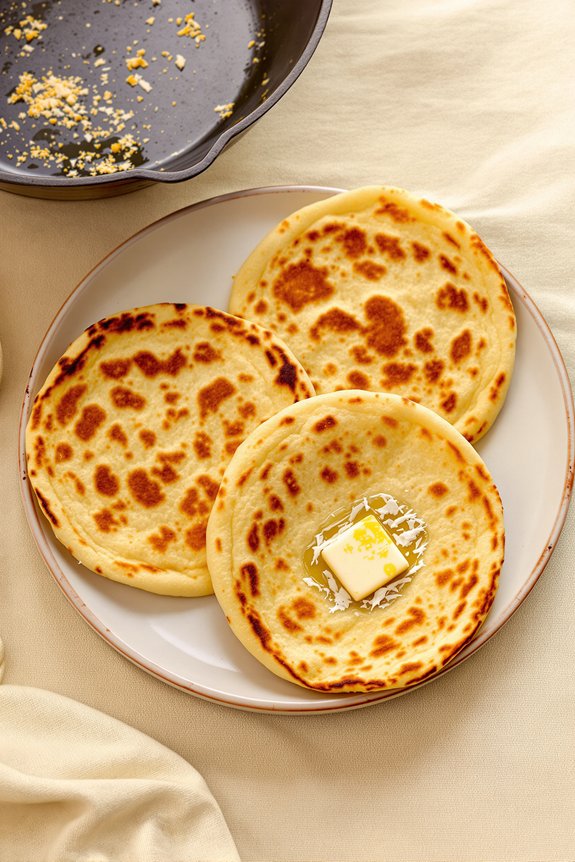
Place your arepas in the skillet and let them toast on one side until they develop a golden crust, then carefully flip them to toast the other side. This is where you need to channel your inner careful person because yes, they’re hot, and yes, that oil likes to splatter.
Once both sides are beautifully toasted and golden, transfer them to a baking sheet and pop them in a 350-degree oven for 20 to 30 minutes. This final oven time cooks the inside thoroughly while keeping that crispy exterior, and you’ll know they’re done when they sound slightly hollow if you tap them.
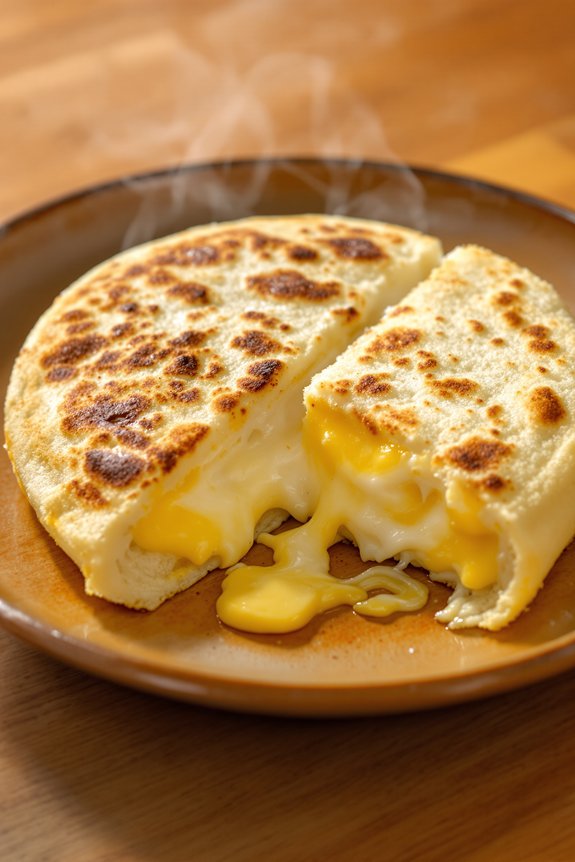
Then comes the best part—slice them open horizontally like a pita pocket and stuff them with whatever your heart desires, whether that’s butter, cheese, ham, or honestly, all of the above.
Authentic Venezuelan Arepas Substitutions and Variations
Look, I get it—sometimes you open your pantry and realize you’re missing an ingredient, or maybe you’ve got dietary restrictions that make the classic recipe a no-go, or perhaps you’re just the type of person who can’t leave well enough alone and needs to tinker with everything.
Here’s the deal: Harina Pan is non-negotiable. You need that pre-cooked cornmeal specifically, not regular cornmeal, not polenta.
But the fillings? That’s where you can go wild. Shredded chicken, black beans, plantains, avocado, scrambled eggs—honestly, treat them like edible plates and pile on whatever makes your heart happy.
What to Serve with Authentic Venezuelan Arepas
Since arepas are basically the perfect food—crispy outside, fluffy inside, stuffed with whatever your fridge is offering—you might think they don’t need sidekicks, but hear me out.
I love serving them with simple black beans on the side, maybe some avocado slices with lime squeezed over top. A tangy coleslaw cuts through the richness beautifully.
Or keep it traditional with plantains, either fried sweet ones or savory tostones. Honestly, a fresh tomato salad with cilantro works too.
The point is, arepas play well with others, even if they’re already stealing the spotlight at your table.
Final Thoughts
If you’ve never made arepas before, I’m telling you right now—this is your sign to stop scrolling recipes and actually do it. Seriously, what’s holding you back? These little corn cakes are forgiving, they’re versatile, and honestly, they make you look way more skilled in the kitchen than the effort required. Plus, once you nail the basic dough, you can stuff them with literally anything sitting in your fridge. I’m talking cheese, beans, scrambled eggs, leftover chicken. The world becomes your arepa-filling playground, and trust me, that’s a beautiful place to be.