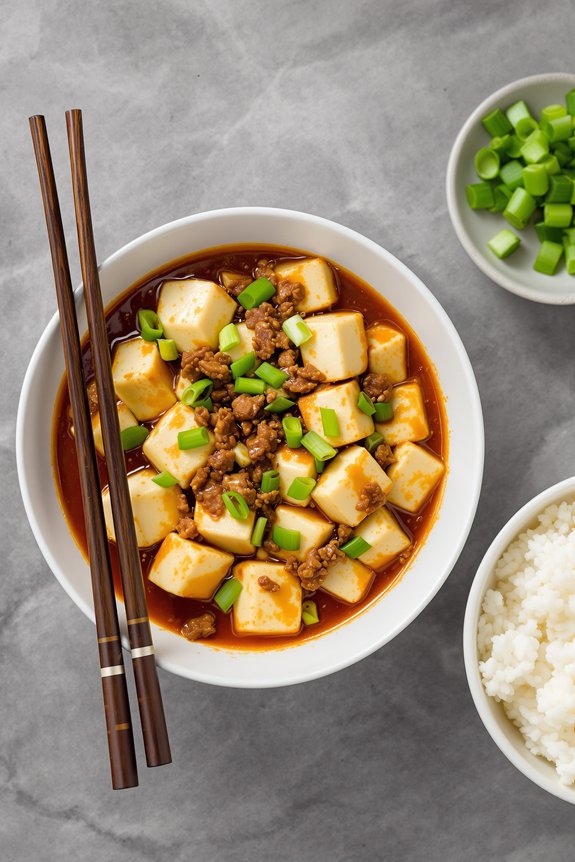
Why You’ll Love this Silky Mapo Tofu
Because this mapo tofu manages to be both ridiculously simple and deeply satisfying at the same time, which honestly feels like cheating.
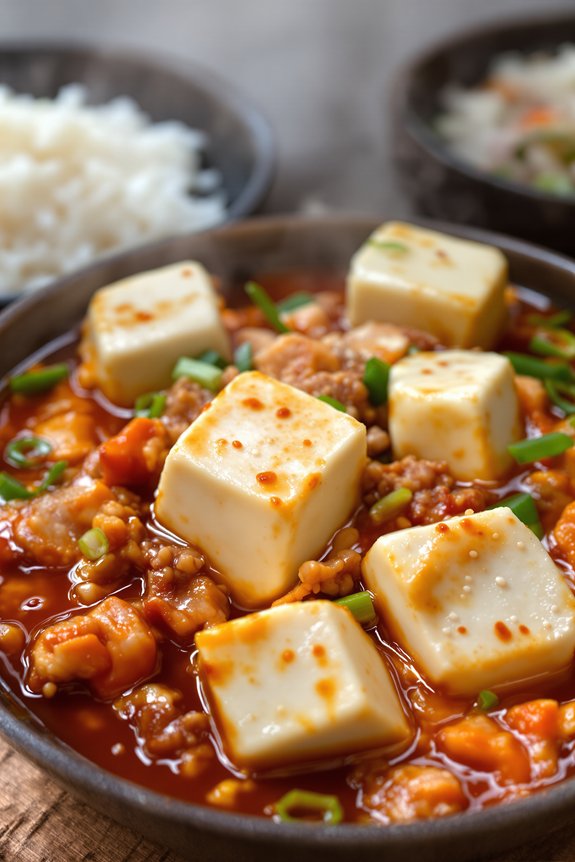
You get this silky, numbing heat that coats every cube of tofu, all while your kitchen smells like a proper Sichuan restaurant. The sauce clings to the tofu without drowning it, the pork adds little bursts of savory richness, and those garlic chives bring this fresh, almost grassy note that cuts through everything.
It’s comfort food that doesn’t require you to stand over the stove for hours, which is exactly what I need most days.
What Ingredients are in Silky Mapo Tofu?
The ingredient list for mapo tofu is wonderfully short, which is one of those rare cooking victories where maximum flavor doesn’t require you to mortgage your pantry. You need firm tofu, ground pork, aromatics like garlic and ginger, a couple of essential Chinese sauces, and some garlic chives that really tie the whole thing together.
Most of these ingredients live happily in my fridge or pantry for weeks, which means I can pull this dish together on a random Tuesday without planning ahead, and honestly, that’s the kind of recipe flexibility that keeps me actually cooking instead of ordering takeout.
For the tofu and base:
- 350 g firm tofu (1 package)
- 100 g ground pork (3.53 oz)
- 30 g garlic chives (1.06 oz), cut into 1/2 inch pieces
- 1 tablespoon chopped garlic
- 1 tablespoon chopped ginger
- 1 tablespoon sesame oil
For the sauce:
- 1/2 tablespoon chili bean paste (doubanjiang)
- 1 tablespoon sweet bean sauce (tian mian jiang)
- 1/2 teaspoon granulated chicken stock (Chinese style)
- 150 ml hot water (5.07 fl oz)
- 1 tablespoon soy sauce
- 2 tablespoons sake (divided)
- 2 teaspoons potato starch
- 1 1/3 tablespoons water
To serve:
- 1 cup steamed rice
- 1 pinch Sichuan pepper (optional)
The chili bean paste and sweet bean sauce might require a trip to an Asian grocery store if you don’t already have them, but they’re absolute workhorses that’ll last you through multiple batches of this and other stir-fries.
The doubanjiang especially is where that deep, fermented umami comes from, so don’t skip it or try to substitute regular hot sauce, because you’ll end up with something that tastes more confused than authentic.
Firm tofu works best here since it holds its shape during cooking, and while silken tofu is traditional in some versions, it tends to break apart if you’re not incredibly gentle, which, let’s be real, most of us aren’t when we’re hungry and rushing through dinner.
How to Make this Silky Mapo Tofu
The first move is to wrap your 350 g of firm tofu in a thick paper towel and let it hang out for 20 minutes to dry out, which I know feels like an eternity when you’re already hungry, but this step prevents your finished dish from turning into a watery mess that dilutes all that gorgeous sauce you’re about to build.
While the tofu is doing its thing, get your prep work done because once you start cooking, everything moves fast. Finely chop 1 tablespoon each of garlic and ginger, cut your 30 g of garlic chives into half-inch pieces, dissolve 1/2 teaspoon of granulated chicken stock in 150 ml of hot water, and mix 2 teaspoons of potato starch with 1 1/3 tablespoons of water in a separate small bowl.
Once your tofu has dried, cut it horizontally into two slabs, then cube those slabs into roughly 3/4-inch pieces, which is small enough to get good sauce coverage but big enough that you won’t accidentally mash them into tofu scramble when you’re stirring later.
Heat up your pan or wok until it’s properly hot, add 1 tablespoon of sesame oil, then toss in your 100 g of ground pork and brown it thoroughly over high heat, breaking it up as it cooks. If you’re looking to upgrade your cookware, professional stainless steel cookware offers excellent heat distribution and durability that can elevate dishes like this one to restaurant-quality results.
Once the pork is nicely browned, add your chopped garlic and ginger, turn the heat down to medium, and here’s where it gets a little fancy: push all that pork and aromatics to one side of the pan and add 1/2 tablespoon of chili bean paste and 1 tablespoon of sweet bean sauce to the cleared space.
Fry those sauces on low heat while stirring constantly to keep them from burning, which they absolutely will do if you wander off to check your phone, then mix everything together until the pork is evenly coated in that deep, reddish-brown glory.
Add 1 tablespoon of sake and stir until the moisture evaporates, then pour in your chicken stock mixture along with 1 tablespoon each of soy sauce and another tablespoon of sake, giving it a light stir to combine.
Now comes the moment where you need to channel your inner gentle soul: carefully add those tofu cubes to the pan and spread them out without aggressively stirring, because nobody wants broken tofu rubble.
Crank the heat to high until everything boils, then drop it to medium-low and let the whole thing simmer for 2-3 minutes so the tofu can soak up all those flavors like a delicious little sponge.
Toss in your garlic chives and mix gently, then give your potato starch slurry a final stir before slowly drizzling it into the pan while you gently slide your spatula across the bottom of the pan in a motion away from you, which helps thicken the sauce without demolishing your carefully preserved tofu cubes.
Hit it with high heat for a final 30 seconds, remove from heat, and serve it over 1 cup of steamed rice with an optional pinch of Sichuan pepper if you want that tingly, numbing heat that makes your mouth feel like it’s having its own little adventure.
Silky Mapo Tofu Substitutions and Variations
Look, I get it—sometimes you open your pantry expecting to find sweet bean sauce and instead discover three half-empty jars of something unidentifiable from 2019, which means you need a game plan for swapping ingredients without completely destroying the soul of this dish.
Can’t find sweet bean sauce? Hoisin works in a pinch, though it’s sweeter.
No Sichuan pepper? Black pepper adds bite without that signature numbing tingle.
Swap ground pork for turkey, chicken, or crumbled tempeh if you’re feeling virtuous. Silken tofu makes things even smoother, while extra-firm holds its shape better during aggressive stirring.
What to Serve with Silky Mapo Tofu
Since mapo tofu arrives at your table radiating heat and packed with flavor that could wake up a hibernating bear, you need side dishes that won’t compete for attention but instead play the supporting role like a good friend who knows when to let you have the spotlight.
I’m serving this over steamed white rice, which soaks up that glorious, spicy sauce like a sponge.
Simple stir-fried vegetables work beautifully too—bok choy, Chinese broccoli, whatever’s crisp and green. A mild cucumber salad provides cooling relief between bites.
Keep everything straightforward, clean-tasting, neutral. Let the mapo tofu be the star performer.
Final Thoughts
Making this silky mapo tofu isn’t some mystical culinary achievement that requires a decade of training under a temperamental chef in Sichuan.
It’s weeknight dinner material, the kind that makes you feel accomplished without demanding perfection.
Sure, your tofu cubes might break a little when you stir, maybe your sauce gets slightly thicker than mine, but who’s judging?
The beauty here is that even imperfect mapo tofu tastes incredible.
That numbing Sichuan pepper, the savory pork, the silky tofu soaking up all those complex flavors—it’s forgiving food that rewards your effort every single time.