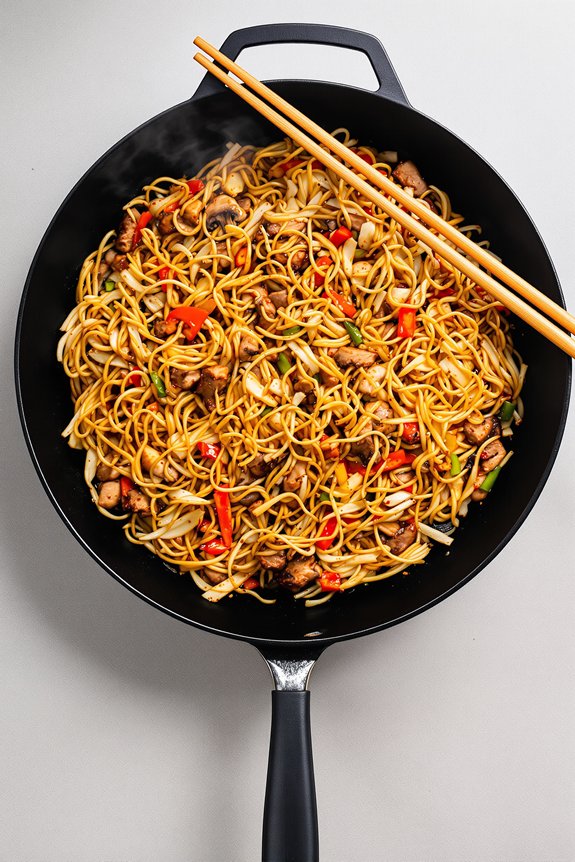
Why You’ll Love this Savory Shrimp Lo Mein
Look, I’m not going to pretend this shrimp lo mein is some revolutionary culinary breakthrough that’ll change your life forever, but it’s the kind of dish that makes you wonder why you ever bothered with takeout in the first place.
The noodles get that perfect slippery texture, the shrimp stays tender instead of rubbery, and honestly, the bok choy adds this crisp freshness that balances everything out.
Plus, you control the sodium levels, which means you won’t feel like you need to drink a gallon of water afterward. That alone makes it worth the effort.
What Ingredients are in Savory Shrimp Lo Mein?
Alright, let’s talk ingredients, because honestly, this list isn’t nearly as intimidating as it looks at first glance. Sure, there are quite a few items here, but most of them are vegetables you can prep while your rice is cooking, or cornstarch you probably already have lurking in your pantry.
The beauty of lo mein is that it’s basically a “whatever’s in your fridge” situation dressed up with some oyster sauce and noodles, though I promise this version is much more intentional than that.
For the Shrimp:
- 3/4 lb shrimp, fresh or frozen, peeled and deveined
- 1 teaspoon cornstarch
- 1/2 teaspoon sesame oil
- 1/4 teaspoon salt
- 1/8 teaspoon white pepper
For the Vegetables:
- 8 ounces bok choy, about 4 large stalks
- 6 ounces pea pods
- 4 ounces mushrooms
- 2 green onions with tops
For the Sauce and Noodles:
- 3 tablespoons cornstarch
- 3 tablespoons cold water
- 2 quarts water for boiling
- 1 (8 ounce) package Chinese egg noodles
- 4 tablespoons vegetable oil, divided
- 1 teaspoon gingerroot, chopped
- 1 teaspoon garlic, finely chopped
- 1/4 cup oyster sauce
- 1 teaspoon salt
- 1 cup chicken broth
- 1 cup barbecued pork, sliced
Now, about sourcing this stuff. The Chinese egg noodles are typically in the Asian food section of most grocery stores, and if you can’t find them, honestly, any fresh lo mein noodles or even linguine will work in a pinch.
The barbecued pork, which is usually char siu if you’re getting fancy with terminology, can be found at Asian markets or some deli counters, but you could absolutely swap it for rotisserie chicken, leftover pork tenderloin, or just skip the meat entirely and add more vegetables.
The oyster sauce is non-negotiable though, because that’s what gives lo mein its distinctive savory, slightly sweet flavor that makes it taste like actual lo mein instead of just stir-fried noodles with stuff on top.
Recommended Products

Mercer Culinary Hell\'s Handle 6-Inch x 3-Inch Turner/Spatula
Flat griddle spatula - Metal turner spatula
VIEW LATEST PRICE
OXO Good Grips Shrimp Deveiner and Cleaner Tool
Shrimp deveiner tool - OXO shrimp cleaner
VIEW LATEST PRICE
How to Make this Savory Shrimp Lo Mein
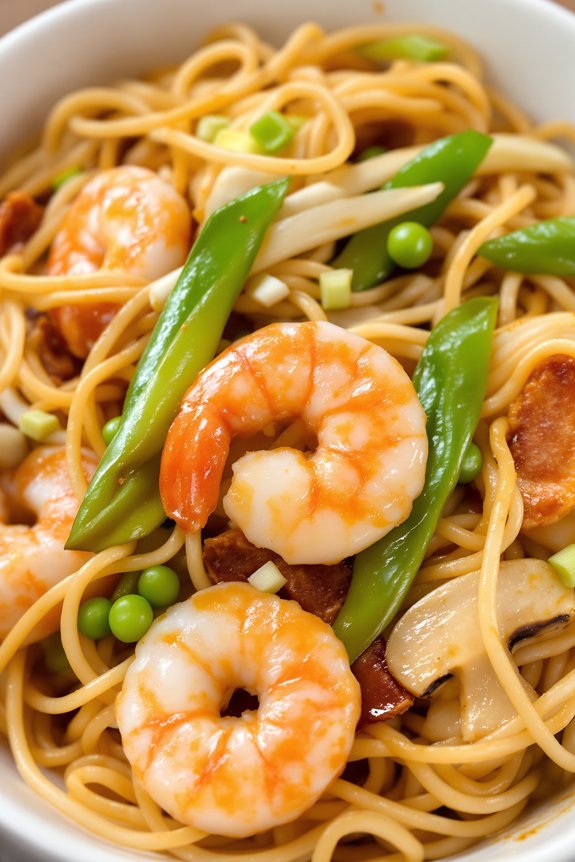
Let’s be honest, the actual cooking part of lo mein is where things move fast, so your prep work is everything. Start by prepping your shrimp, which means peeling them if you haven’t already, and here’s a neat trick: if you’re working with frozen shrimp, don’t bother thawing them completely because you can just peel them under cold running water, which is somehow way easier than wrestling with slippery thawed shrimp.
Make a shallow cut down the back of each shrimp and rinse out that sand vein, because nobody wants a gritty bite in their dinner, then cut each shrimp lengthwise into halves. Toss those shrimp halves with 1 teaspoon cornstarch, 1/2 teaspoon sesame oil, 1/4 teaspoon salt, and 1/8 teaspoon white pepper in a bowl, cover it, and stick it in the fridge for 20 minutes while you handle everything else. This is called velveting, and it’s what gives restaurant shrimp that tender, almost bouncy texture instead of the rubbery sadness we sometimes end up with at home.
While your shrimp is marinating, you’re going to prep what feels like a mountain of vegetables, but trust me, they cook down. Separate the 8 ounces of bok choy leaves from the stems because they cook at different rates, then cut the leaves into 2-inch pieces and slice the stems diagonally into 1/4-inch slices, keeping them separate because you’ll add the stems first.
Remove the strings from 6 ounces of pea pods, blanch them in boiling water for exactly 1 minute, then drain and immediately rinse them under cold water to stop the cooking, which keeps them bright green and crisp. Slice up 4 ounces of mushrooms into 1/2-inch pieces, cut 2 green onions into 2-inch lengths, and mix together 3 tablespoons cornstarch with 3 tablespoons cold water in a small bowl for your sauce thickener later.
Now heat 2 quarts of water in a Dutch oven, add the 8-ounce package of Chinese egg noodles, and cook them for about 5 minutes until they’re soft and you can actually separate the strands, then drain and keep them warm in a 300°F oven while you tackle the stir-fry portion.
Here’s where your wok comes in, and if you don’t have a wok, a large skillet will work but you might need to cook in batches because overcrowding is the enemy of a good stir-fry. Heat your wok until a drop of water sizzles and dances across the surface, add 2 tablespoons vegetable oil and swirl it around to coat the sides, then toss in your marinated shrimp along with 1 teaspoon chopped gingerroot and 1 teaspoon finely chopped garlic.
Stir-fry just until the shrimp turns pink, maybe a minute or two, then pull the shrimp out and set it aside. Add another 2 tablespoons vegetable oil to the wok, toss in those bok choy stems first and stir-fry for 1 minute because they’re the toughest part, then add the bok choy leaves, 4 ounces of sliced mushrooms, 1/4 cup oyster sauce, and 1 teaspoon salt, stirring everything together for another minute.
Pour in 1 cup chicken broth and bring it to a boil, then stir in your cornstarch mixture and watch it thicken up in about 10 seconds, which is genuinely satisfying every single time. Finally, add back the shrimp along with the blanched pea pods, green onions, and 1 cup sliced barbecued pork, give everything a quick 30-second toss to heat through, and serve the whole glorious mess over your warm noodles.
The key is moving quickly once you start cooking, because stir-frying waits for no one, and honestly, that’s part of what makes it feel like you’re running your own tiny restaurant for about seven chaotic minutes. If you find yourself making breakfast dishes just as often as dinner, investing in a professional french toast griddle can give you that same restaurant-quality control over temperature and timing.
Recommended Products

All-Clad D3 Stainless Steel 3-Piece Fry Pan Set
All-Clad fry pan set - Stainless steel skillet
VIEW LATEST PRICE
Cuisinart Chef\'s Classic Nonstick Hard-Anodized 12-Inch Skillet with Helper Handle
Cuisinart 12 inch nonstick skillet - Hard anodized skillet
VIEW LATEST PRICE
Le Creuset Enameled Cast Iron 13.25-Inch Deep Skillet
Le Creuset skillet - Cast iron deep skillet
VIEW LATEST PRICESavory Shrimp Lo Mein Substitutions and Variations
When you’re staring at your fridge trying to figure out what you can swap because the grocery store was out of pea pods or you just realized you forgot to buy oyster sauce, there’s actually a ton of flexibility in this recipe.
Use chicken instead of shrimp, swap snow peas for sugar snaps, or try soy sauce mixed with hoisin if oyster sauce isn’t happening. I’d even throw in bell peppers or broccoli.
The noodles? Regular spaghetti works in a pinch. Sometimes I skip the barbecued pork entirely and double the shrimp because honestly, who’s counting.
What to Serve with Savory Shrimp Lo Mein
Once you’ve got your variations sorted, you’ll probably want to figure out what else goes on the table because serving lo mein by itself feels kind of incomplete, right?
I like keeping things simple with steamed dumplings or crispy spring rolls on the side.
Sometimes I’ll throw together a quick cucumber salad with rice vinegar and sesame seeds, which cuts through all that savory richness.
Hot and sour soup works great too if you want something warming.
The key is balancing textures and flavors, so you’re not just drowning in noodles. Keep it light, keep it complementary.
Final Thoughts
Although this recipe might look intimidating with all those steps, shrimp lo mein is honestly one of those dishes that becomes second nature after you make it a couple times. The prep work is really where you’ll spend most of your time, but once everything’s chopped and ready, the actual cooking flies by in minutes. I mean, we’re talking restaurant-quality noodles in your own kitchen, which feels pretty amazing when you’re twirling them around your fork. Plus, you can adjust the vegetables to whatever you have on hand, making this recipe endlessly adaptable to your mood and pantry.