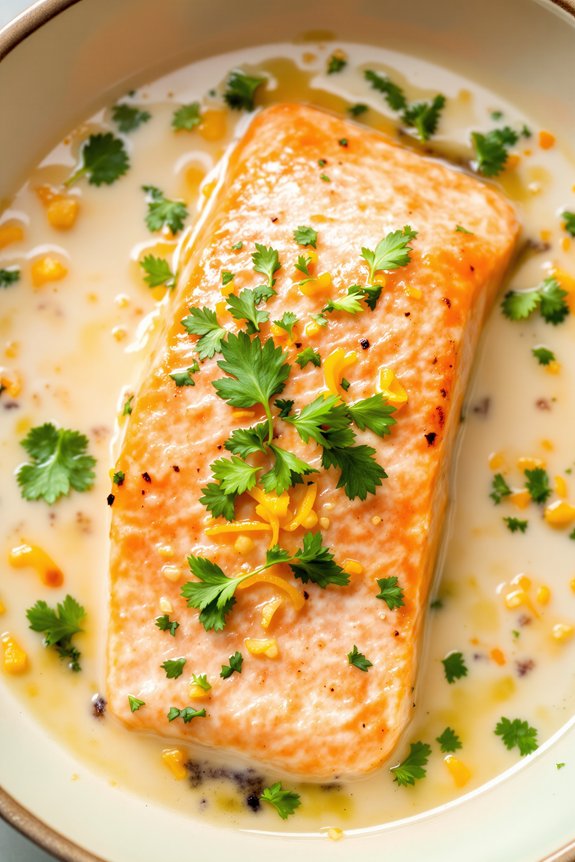
Why You’ll Love this Tropical Fusion Mahi Mahi
When I tell you this dish comes together in under 20 minutes, I mean it—and that includes the time you’ll spend staring at your pan wondering if something this easy can actually taste this good.
The mango chunks melt into this sweet, tropical sauce that clings to the flaky fish, while the cashew butter adds richness without feeling heavy.
You get warmth from the garam masala, a hint of smoke from paprika, and that perfect salty-sweet balance from hoisin and soy sauce.
It’s the kind of dinner that makes you look like you actually know what you’re doing in the kitchen.
What Ingredients are in Tropical Fusion Mahi Mahi?
This dish keeps things invigoratingly simple—no specialty store runs, no ingredients you’ll buy once and never use again, just straightforward stuff you can probably find at your regular grocery store.
The ingredient list is short enough that you won’t lose track of what you’re doing, which is always a win in my book.
Here’s what you’ll need:
- 8 ounces mahi mahi filet (frozen is totally fine)
- 1/4 cup frozen mango chunks
- 1 tablespoon coconut oil
- 1 tablespoon smooth cashew butter
- 2 tablespoons minced garlic
- 1 teaspoon hoisin sauce
- 2 teaspoons soy sauce
- 1 tablespoon garam masala
- 1 teaspoon paprika
Now, a couple of things worth mentioning. First, don’t stress if your mahi mahi is frozen—that’s actually what the original recipe calls for, and it works beautifully.
Same goes for the mango chunks, frozen is the move here. The cashew butter should be smooth, not chunky, because you want it to blend into that sauce situation you’re creating.
If you can’t find cashew butter, almond butter would probably work in a pinch, though the flavor won’t be quite the same. The garam masala is really what gives this dish its warm, aromatic backbone, so don’t skip it or try to substitute it with something random like Italian seasoning.
Trust me, that spice blend matters more than you’d think.
Recommended Products


Stainless Steel Sauerkraut Pounder and Tamper Tool
Sauerkraut tamper - Cabbage tamper
VIEW LATEST PRICEHow to Make this Tropical Fusion Mahi Mahi

The beauty of this recipe is that most of the work happens before you even turn on the stove. Start by grabbing a bowl and mixing together everything except the coconut oil and the fish itself—so that’s your 1/4 cup frozen mango chunks, 1 tablespoon cashew butter, 2 tablespoons minced garlic, 1 teaspoon hoisin sauce, 2 teaspoons soy sauce, 1 tablespoon garam masala, and 1 teaspoon paprika.
Just stir it all together until it looks like a chunky, aromatic sauce situation. It might seem a little strange to combine everything first, but this method means you’re not frantically measuring spices while your fish is cooking, which honestly is when kitchen disasters tend to happen.
Once your sauce is ready, heat up 1 tablespoon coconut oil in a pan over medium-high heat and add your 8 ounces of mahi mahi filet. Let it sauté for about 3 minutes, just enough to get a little color on it and start the cooking process.
Now here’s where it gets interesting. After those initial 3 minutes, dump all your pre-mixed ingredients right into the pan with the fish. Turn the heat down to medium and let everything cook together until the mahi mahi gets soft and flaky, which usually takes another few minutes depending on how thick your filet is.
One thing the original recipe points out, and it’s worth noting, is that the mango chunks tend to cook slower than the fish does. So you might find yourself in a situation where your fish is perfectly done but those mango pieces are still a bit firm. If that happens, just pull the fish out and let the mango hang out in the pan for an extra 2 minutes or so, then pour that fruity, spiced sauce right over your fish.
The whole thing comes together pretty quickly once you get going, so make sure you’ve got your side dishes ready to go, whether that’s panfried potatoes with rosemary and garlic like the original suggests, or just some rice if you’re keeping it simple. If you’re looking to upgrade your cookware, consider investing in premium dutch oven cookware that can handle everything from stovetop sautéing to oven braising.
Recommended Products

All-Clad D3 Stainless Steel 3-Ply Bonded 10-Piece Cookware Set
All-Clad cookware set - Stainless steel pot set
VIEW LATEST PRICE
All-Clad Stainless Steel Tri-Ply Bonded Dishwasher Safe Stir Fry Pan with Lid / Cookware, 13-Inch, Silver
All-clad stir fry pan - Stainless steel wok pan
VIEW LATEST PRICE
Tropical Fusion Mahi Mahi Substitutions and Variations
Why stick to the exact recipe when you’ve got a whole ocean of possibilities sitting in your freezer or at the fish counter?
I swap mahi mahi for salmon, swordfish, or even shrimp without losing sleep over it. The mango can become pineapple chunks, peaches, or papaya.
No cashew butter? Almond or peanut butter works perfectly. If garam masala isn’t lurking in your spice cabinet, curry powder steps right in.
You can dial back the hoisin for a lighter sauce, add lime juice for brightness, or toss in some ginger for extra zing.
Make it yours.
What to Serve with Tropical Fusion Mahi Mahi
Since this dish already brings sweet mango, savory cashew butter, and warming spices to the table, I lean toward sides that won’t compete for attention but instead give my taste buds a place to rest between bites.
The original recipe suggests panfried rosemary garlic potatoes with caramelized onions, which honestly sounds perfect. I also love plain jasmine rice, which soaks up that gorgeous sauce without adding extra complexity.
Steamed broccoli works too, or maybe some simple coconut rice if I’m feeling fancy. The key is keeping things neutral so the mahi mahi stays the star of the show.
Final Thoughts
With sides sorted out, I’ll be honest—this Tropical Fusion Mahi Mahi recipe feels like one of those happy accidents that works way better than it should on paper.
Frozen mango with cashew butter and garam masala? Sounds weird until that first bite hits.
The real beauty is how forgiving it is. Too much garlic? Still works. Mango chunks varying in size? They’ll caramelize at different rates, giving you texture variety.
I mean, who knew hoisin sauce would play nice with tropical vibes? Sometimes the best dishes come from just trusting the process, tossing everything together, and seeing what happens.