Why You’ll Love this Authentic Vietnamese Pho Bac
When you’re craving something that feels like a warm hug from the inside out, this Northern-style pho hits differently than your average soup.
The depth here is unreal, thanks to charred aromatics and those toasted spices that make your kitchen smell like a Hanoi street stall. I’m talking layers upon layers of flavor that you just can’t rush.
And here’s the thing, the beef gets cooked two ways, so you get tender slices plus those paper-thin raw pieces that cook right in your bowl.
It’s the kind of meal that makes you wonder why you ever settled for takeout.
What Ingredients are in Authentic Vietnamese Pho Bac?
Getting your ingredients together for pho bac is kind of like assembling the pieces of a really delicious puzzle, and honestly, the list looks way more intimidating than it actually is. Most of this stuff, you can grab at any Asian market, and some of it you probably already have hanging out in your pantry.
The thing about Northern-style pho is that it’s all about building that deep, complex broth, which means we’re working with bones, aromatics, and a lineup of spices that’ll make your whole house smell incredible.
For the Broth:
- 5 lbs beef leg bones, cut into 3-inch pieces (grass-fed if you can swing it)
- 1½ lbs boneless beef chuck, trimmed and cut into 4-inch x 2-inch x 1½-inch thick pieces
- 6 quarts cold water
- 4 large unpeeled shallots
- 1 piece unpeeled ginger, about 4 inches long
- 1 teaspoon fennel seeds
- 5 star anise
- 1 stick cinnamon, about 3 inches
- 1 black cardamom pod, crushed
- ½ ounce dried scallops
- 2 tablespoons kosher salt, plus more to taste
- ¼ cup fish sauce
- 8 scallions (whites kept whole, greens thinly sliced)
For Serving:
- 2 lbs small flat rice noodles
- 8 ounces beef sirloin, sliced thin across the grain into ½-inch thick pieces
- 1 medium yellow onion, thinly sliced and soaked in cold water for 30 minutes
- ⅓ cup fresh cilantro leaves
- Fresh ground black pepper
- 1½ tablespoons unseasoned rice vinegar
- 2 serrano chiles, stemmed and thinly sliced crosswise
Now, here’s where I need to level with you about a few things. Those dried scallops might seem like a weird addition, but they add this umami punch that takes the broth from good to “I need to know your secrets” territory.
If you can’t find black cardamom, regular cardamom works in a pinch, though the smoky flavor won’t be quite the same. The grass-fed beef bones are a preference thing; they tend to make a cleaner-tasting broth, but regular bones will absolutely get you there.
And that raw sirloin that goes on top, make sure you slice it super thin because it’s going to cook in the hot broth, which is part of the magic of pho.
Recommended Products


Spice Lab Achiote Paste 16oz Authentic Mexican Annatto Paste
Achiote paste - Annatto paste Mexican
VIEW LATEST PRICE
How to Make this Authentic Vietnamese Pho Bac
Okay, first things first: we’re charring aromatics like we’re trying to add a little drama to our vegetables’ lives. Get your broiler going with the rack about 4 inches from the heat, then toss those 4 large unpeeled shallots and that 4-inch piece of unpeeled ginger onto a foil-lined baking sheet. Broil them, turning often so they don’t burn to a complete crisp on one side while staying pale on the other, until they’re nicely blackened all over, which takes about 15 to 20 minutes.
Let them cool because nobody needs blistered fingers, then scrape off the peels. Cut the ginger in half lengthwise and give each piece a good whack with the side of your knife to flatten it out, which helps release all those aromatic oils.
While you’re in spice-toasting mode, grab a small skillet and throw in your 1 teaspoon fennel seeds, 5 star anise, that 3-inch cinnamon stick, and 1 crushed black cardamom pod. Toast them over medium heat, swirling the pan around like you’re trying to hypnotize the spices, until they smell absolutely incredible, about 3 minutes. Set those aside because we’re about to get serious with the bones.
Here’s where we deal with the whole blanching-the-bones situation, which honestly sounds fussy but is actually the secret to a clear broth instead of a murky mess. Put your 5 lbs of beef leg bones in a 12-quart pot, cover them with cold water by about an inch, and bring it all to a boil. Let it cook for 3 minutes while all the gunk rises to the surface, which is deeply satisfying in a gross kind of way, then drain and rinse those bones really well.
Clean out the pot because nobody wants that scum in their final soup, then return the bones along with your charred shallots and ginger, the 1½ lbs of beef chuck pieces, and 6 quarts of cold water. If you’re investing in premium dutch oven cookware, you’ll find it holds heat beautifully for this kind of long-simmered broth, though any heavy pot will work. Bring everything to a boil again, then dial it back to medium-low and add your toasted spices, ½ ounce dried scallops, and 2 tablespoons kosher salt.
Now comes the easy part that requires patience, which is basically an oxymoron: you’re going to let this simmer, skimming the surface every so often, until that beef chuck is tender enough to slice, about 1½ hours. When it is, fish out the beef with tongs and plunge it into a bowl of ice water for 10 minutes, which stops the cooking and helps it firm up for slicing. Drain it, slice it thin crosswise, and stick it in the fridge on a covered plate.
Your broth needs another 1½ hours of gentle simmering to extract every last bit of flavor from those bones, so go do something else for a while, maybe prep your toppings or contemplate why broth takes so ridiculously long to make. When the time’s up, carefully pour everything through a fine strainer lined with cheesecloth set over a clean 6-quart pot, ditch all the solids, and skim off the fat that’s floating on top.
Stir in ¼ cup fish sauce and the white parts of 8 scallions, keeping the whole thing hot while you deal with the assembly line. Mix 1½ tablespoons rice vinegar with 2 sliced serrano chiles in a small bowl for serving on the side.
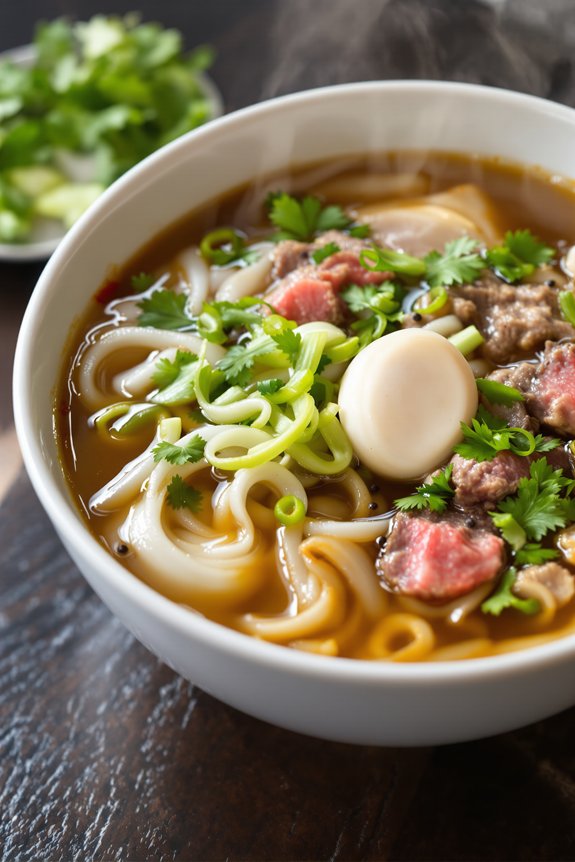
Pour boiling water over your 2 lbs rice noodles in a medium bowl and let them soak until they’re al dente, about 10 minutes, then rinse them in cold water, drain well, and divide them between 8 serving bowls. Top each bowl with some of that chilled cooked beef and the 8 ounces raw sirloin slices, then layer on your drained sliced yellow onion, the thinly sliced scallion greens, and ⅓ cup fresh cilantro leaves.
Hit it with some black pepper, then ladle that gorgeous hot broth over everything, making sure each bowl gets one of those whole scallion whites. The raw beef will cook right there in the bowl, which is possibly the coolest part of this whole production, and you’ll serve those vinegar-soaked chiles on the side for people who like their soup with a little heat and tang.
Recommended Products

Lee Kum Kee Premium Oyster Sauce 18 oz
Lee kum kee oyster sauce - Premium oyster sauce
VIEW LATEST PRICE
Kikkoman Naturally Brewed Soy Sauce 64 oz
Kikkoman soy sauce 64 oz - Japanese soy sauce bulk
VIEW LATEST PRICE
Authentic Vietnamese Pho Bac Substitutions and Variations
Look, I get it—tracking down dried scallops and black cardamom at your regular grocery store might feel like setting out on some kind of culinary scavenger hunt you didn’t sign up for, and maybe you’re staring at this ingredient list wondering if you can just, you know, work with what you’ve got.
Here’s the thing: you can skip the dried scallops entirely if you’re in a bind, though they do add this subtle umami depth.
Black cardamom? Regular green cardamom works, just use two pods instead.
No grass-fed bones? Standard beef bones still make excellent broth.
Sirloin too pricey? Eye of round slices beautifully.
What to Serve with Authentic Vietnamese Pho Bac
While pho is technically a complete meal all on its own—you’ve got your protein, your carbs, your aromatics, that rich bone broth—I’m still going to level with you that serving it with the right accompaniments transforms it from really good to the kind of thing people will text you about weeks later.
I always set out fresh Thai basil, bean sprouts, lime wedges, and extra sliced chilies.
Some people add hoisin and sriracha directly to their bowl, which is totally fine, though purists might side-eye you.
Fried breadsticks for dunking? Chef’s kiss. That crunch against the silky broth hits different.
Final Thoughts
If you’ve made it this far through the recipe, through the charring and the skimming and the three-hour simmer, you already know this isn’t the kind of dish you throw together on a Tuesday night when you’re tired.
This is the pho you make when you want to understand what Northern Vietnamese cooks have been perfecting for generations. The one that fills your kitchen with star anise and roasted ginger, the one that rewards patience with clarity.
It’s not quick. It’s not easy. But honestly, isn’t that the point of cooking something worth remembering?