Why You’ll Love these Traditional Boiled Dumplings
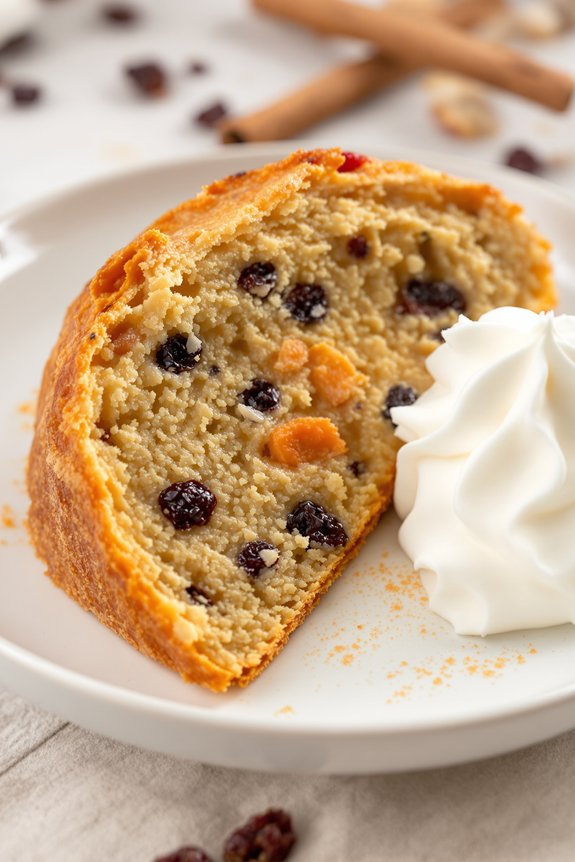
If you’re wondering whether a dumpling that takes two hours to boil is worth your time, let me paint you a picture: imagine a dense, spiced pudding that’s somehow both cake-like and pudding-like at once, studded with plump raisins and currants that have absorbed all that cinnamon-sugar goodness.
This isn’t your average dessert. It’s a heritage recipe that turns humble ingredients into something genuinely special. The grated apple and carrot add moisture and a subtle sweetness you can’t quite place.
Plus, there’s something deeply satisfying about wrapping dough in a pillowcase and dunking it into boiling water like you’re performing kitchen witchcraft.
What Ingredients are in Traditional Boiled Dumplings?
Let me tell you, this ingredient list looks weird at first glance. Suet? A pillowcase? But trust me, every single component has a purpose, and together they create something that’s been warming British hearts for generations.
You’ll need basic pantry staples plus a few old-fashioned touches that give this dumpling its characteristic richness and spice.
For the dumpling:
- 2 cups flour
- 1 cup chopped suet or 1/2 cup shortening (shortening works perfectly fine)
- 1/2 cup sugar
- 1 cup raisins
- 1 cup currants
- 1 teaspoon baking soda
- 2 teaspoons cinnamon
- 1/2 teaspoon salt
- 1 apple, grated with skin on
- 1 carrot, grated with skin on
- Water as needed (about 1/2 cup, give or take)
For boiling and baking:
- A large cloth or old pillowcase for wrapping
- String for tying
- A plate to place at the bottom of your pot
Now, about that suet situation. Traditional recipes call for chopped suet, which is beef or mutton fat, and it gives an incredibly rich, authentic flavor.
But here’s the thing: most of us aren’t exactly keeping suet in our fridges these days, and shortening does the job just fine.
The grated apple and carrot might seem like odd additions to what’s fundamentally a sweet dumpling, but they add moisture, a hint of natural sweetness, and help bind everything together.
Don’t skip grating the skins, either. That’s where a lot of the flavor and texture comes from.
And yes, you really do need that old pillowcase or a large piece of cloth, so maybe start hunting through your linen closet now.
Recommended Products

Victorinox 8-Inch Fibrox Pro Chef\'s Knife
Victorinox chef knife - Professional chef knife
VIEW LATEST PRICE

How to Make these Traditional Boiled Dumplings
First things first, you need to get a large pot of water going, and here’s where things get a little weird: drop a plate in the bottom of that pot before you start heating it. I know, I know, it sounds like something your great-grandmother would do because she believed in kitchen magic, but there’s actually a practical reason. That plate prevents your dumpling from sitting directly on the scorching hot bottom and burning, which would be a real shame after all this effort.
While that water’s coming to a boil, mix your 2 cups flour, 1/2 teaspoon salt, 1 teaspoon baking soda, 1/2 cup sugar, and 2 teaspoons cinnamon in a large bowl. Then work in your 1/2 cup shortening (or 1 cup chopped suet if you’re feeling traditional) until the mixture looks like coarse crumbs, kind of like you’re making pie crust. If you’re using fresh suet, a premium meat grinder can make quick work of breaking it down to the right consistency. Toss in your 1 cup raisins, 1 cup currants, the grated apple, and the grated carrot, mixing everything until it’s well combined.
Now comes the tricky part: adding water. You’ll need about 1/2 cup, but add it bit by bit, mixing as you go, until you have a sticky dough that holds together. Not too wet, not too dry, just sticky enough to be annoying to work with.
Now for the really old-fashioned part. Take that large cloth or pillowcase, dip just the center of it into your boiling water, and wring it out so it’s damp but not soaking. Lightly flour that dampened surface, then plop your sticky dough right in the middle.
Here’s the important bit: gather up the sides of the cloth around the dough, but leave some room for the dumpling to expand, because it will. Tie the whole bundle up tightly with string, making sure it’s secure enough that nothing’s going to leak out during the long boil ahead.
Lower your cloth-wrapped dumpling into that boiling water, making sure it’s not touching the sides too much, and let it boil for a minimum of 2 hours. Yes, two whole hours. Check on it every so often to make sure the water level hasn’t dropped too much, and if it has, top it off with some boiling water from a kettle.
When your time’s up, carefully lift out the dumpling, unwrap it (it’s going to look weirdly wet and you might panic that it’s not cooked, but trust the process), and transfer it to a small roasting pan.
Pop it in a 350-degree oven just until the outside browns up and dries out a bit, which shouldn’t take long at all. Let it cool down, slice it up, and serve with whipped cream, canned cream, or a brown sugar sauce for that full nostalgic experience.
Recommended Products

KitchenAid KSM150PSER Artisan Tilt-Head Stand Mixer
KitchenAid stand mixer - Artisan stand mixer
VIEW LATEST PRICE

Regency Natural Cotton Cheesecloth and Unbleached Muslin Cloth Bundle
Muslin cloth - Cheesecloth
VIEW LATEST PRICETraditional Boiled Dumplings Substitutions and Variations
While this recipe is pretty traditional and messing with it might make some old-timers clutch their pearls, I’m a firm believer that recipes should work for your pantry and your preferences.
You can swap the raisins for dried cranberries or chopped dates if that’s what you’ve got. No suet or shortening? Butter works, though it’ll be slightly denser.
Feel free to add chopped nuts, swap the apple for pear, or toss in some orange zest. Want it spicier? Double the cinnamon or add nutmeg and ginger.
The beauty of dumpling cooking is its forgiving nature.
What to Serve with Traditional Boiled Dumplings
Once you’ve got your dumpling sliced and ready to go, you’re probably wondering what actually goes on the plate with it.
Honestly, this thing is rich enough to stand alone, but tradition says you need a topping. The recipe mentions three options: whipped cream, canned cream, or brown sugar sauce.
I’m partial to the brown sugar sauce myself because it soaks into the warm slices and creates this caramel-like situation that’s borderline addictive. Some folks pour on heavy cream straight from the carton.
There’s really no wrong answer here, just varying degrees of delicious indulgence.
Final Thoughts
If you’re looking for a dessert that’ll make your kitchen smell like a Victorian Christmas novel and confuse everyone who tries to guess what you’re making, this boiled dumpling is your answer.
It’s weird, it’s old-fashioned, and honestly, it’s kind of magical. The whole boiling-in-a-pillowcase thing feels like something from a historical reenactment, but that’s part of the charm.
Will people understand what they’re eating? Maybe not. Will they ask for seconds anyway? Absolutely.
This recipe connects you to kitchens from decades ago, back when desserts required actual commitment. Worth every minute of that two-hour boil.