Why You’ll Love this Traditional German Fermented Sauerkraut
While most store-bought sauerkraut sits on shelves for months in vinegar brine, this traditional fermented version actually gets better with time through natural probiotics.
I’m talking real deal fermentation here, not that quick-pickled stuff. The cabbage transforms into tangy, crispy perfection that’ll last for years in your pantry.
No canning equipment needed, no water bath processing, just simple ingredients doing their thing. Plus, you control the salt level and crunch factor.
Want it super sour? Wait longer. Prefer it milder? Dig in after three weeks. It’s foolproof fermentation that practically makes itself.
What Ingredients are in Traditional German Fermented Sauerkraut?
You’re going to love how simple this ingredient list is. We’re talking just a few basic items that you probably already have in your pantry, maybe even that forgotten jar of pickling salt hiding behind the flour. This is the kind of recipe that makes you wonder why anyone bothers with complicated cooking, honestly.
No fancy equipment, no weird specialty items from that one store across town, just straight-up simple stuff that gets the job done.
- 1 large head of cabbage
- 2 teaspoons white vinegar
- 2 teaspoons sugar
- 1 teaspoon pickling salt
- Boiling water
Now, here’s the thing about these ingredients. The pickling salt is kind of important because it doesn’t have iodine or anti-caking agents that can mess with fermentation, though regular salt works in a pinch if that’s what you’ve got.
The cabbage itself should be fresh and firm, not that sad, wilted thing you find in the back of your crisper drawer after two weeks.
And while the recipe calls for white vinegar, you want the plain distilled kind, nothing fancy with herbs or flavors added. The sugar and vinegar are working together here to jumpstart the whole process, creating that perfect environment for your cabbage to transform into something magical.
Oh, and that boiling water? It’s doing double duty, filling the jars and creating that initial hot environment that helps everything along.
Recommended Products

TSM Products Stainless Steel Cabbage Shredder with Adjustable Blade
Cabbage shredder - Sauerkraut shredder
VIEW LATEST PRICE
Homestead Essentials Fermentation Recipe Cards and Guide Set
Fermentation recipe cards - Fermentation guide
VIEW LATEST PRICE
Weck 742 Mold Jar 34.5 oz Set of 6 with Glass Lids
Weck jars - German fermentation jars
VIEW LATEST PRICEHow to Make this Traditional German Fermented Sauerkraut
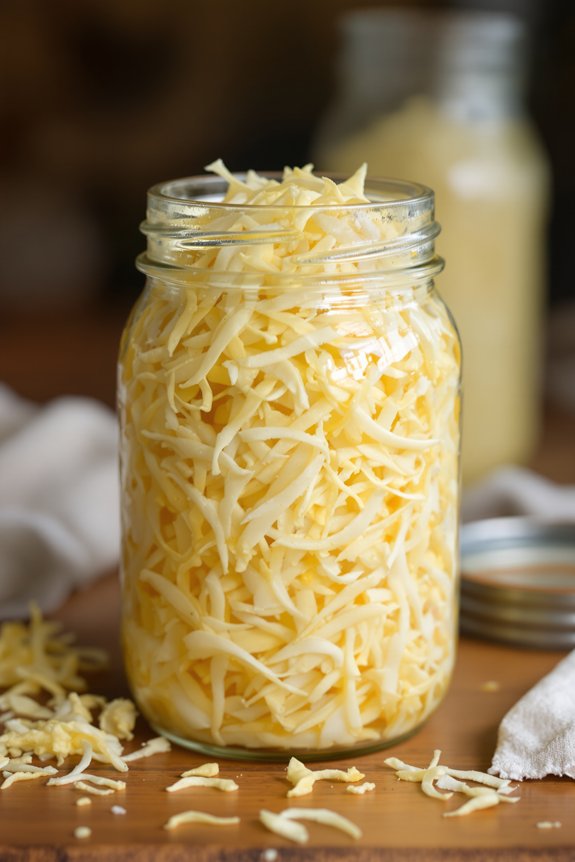
Making sauerkraut is honestly one of those things that sounds way more complicated than it actually is, like parallel parking or folding a fitted sheet. You start by washing your 1 large head of cabbage, and I mean really washing it because who knows what’s been happening to that thing before it got to your kitchen.
Then you chop or shred it up, and here’s where you get to decide if you’re feeling fancy with thin, delicate shreds or more rustic with chunky pieces. Once your cabbage is all cut up, you’re going to pack it into jars, and when I say pack, I mean really stuff it in there. For a more traditional approach, consider using a fermentation crock ceramic vessel which is specifically designed to maintain the ideal conditions for fermentation. Think of it like you’re trying to fit one more sweater into an already full suitcase, that kind of aggressive but controlled pushing. The tighter you pack it, the better your sauerkraut is going to turn out, so don’t be shy about getting your hands in there and pressing down firmly.
Now comes the easy part, which is basically just dumping things into your jars. To each jar, you add 2 teaspoons of white vinegar, 2 teaspoons of sugar, and 1 teaspoon of pickling salt. Just sprinkle them right on top of that packed cabbage, no need to get precious about it or worry about perfect distribution because the boiling water is going to take care of mixing everything together.
Speaking of which, you’re going to pour boiling water into each jar until it covers all that cabbage completely, and yes, it needs to be actually boiling because that heat is part of what kicks off the whole transformation process. Slap those lids on tight, like you’re sealing in a secret, and then you wait.
Put the jars somewhere you won’t knock them over for about 3 weeks, maybe on a shelf in your pantry or that weird corner of your counter that never gets used for anything anyway. The salt is doing all the preserving work here, so you don’t need to mess with proper canning techniques or worry about sterilizing everything to within an inch of its life.
Some jars might seal themselves during the process, which is cool, but it’s not required. After those 3 weeks are up, you’ve got sauerkraut that’ll stay fresh and crisp for literally years, which is kind of mind-blowing when you think about it.
Recommended Products

Weston Ceramic Fermentation Weights for Wide Mouth Mason Jars Set of 4
Fermentation weights - Ceramic weights
VIEW LATEST PRICE
Ohio Stoneware 5 Gallon Fermentation Crock with Weights and Lid
Fermentation crock - Sauerkraut crock
VIEW LATEST PRICE
Bosch Universal Plus 6.5-Quart Stand Mixer MUM6N10UC
Bosch Universal Plus mixer - 800 watt stand mixer
VIEW LATEST PRICETraditional German Fermented Sauerkraut Substitutions and Variations
If you’re the type who gets bored eating the same thing over and over, or if you just want to feel like a culinary genius without actually doing much extra work, there are tons of ways to mess around with this basic sauerkraut formula.
Toss in caraway seeds for that classic deli vibe, or add shredded carrots for sweetness and color. You can swap the white vinegar for apple cider vinegar if you’re feeling fancy.
Want some heat? Throw in red pepper flakes or sliced jalapeños. I’m telling you, the cabbage doesn’t care what you do to it, and neither will your taste buds.
What to Serve with Traditional German Fermented Sauerkraut
So you’ve got this jar of tangy, funky sauerkraut sitting in your fridge, and now you’re staring at it wondering what the heck to actually do with it besides eating it straight from the jar like some kind of fermentation-obsessed goblin.
I’m telling you, sauerkraut belongs piled high on bratwurst, nestled into Reubens with corned beef and Swiss, or stirred into pierogies with caramelized onions.
It cuts through rich pork chops like nobody’s business, and honestly, a hot dog without it feels naked and sad.
Even scrambled eggs get this incredible brightness when you fold in a forkful. The acidity balances fat beautifully.
Final Thoughts
Look, this recipe isn’t authentic German sauerkraut—let’s just get that out of the way right now.
Real kraut ferments for weeks through natural lacto-fermentation, not with vinegar and boiling water.
But here’s the thing: this version is stupid-easy, requires zero babysitting, and tastes pretty darn good on bratwurst.
Do I feel a tiny bit guilty calling it sauerkraut? Maybe.
Will I still make giant batches and store them in my pantry for years? Absolutely.
Sometimes convenience wins, and honestly, I’m okay with that.
Your German grandmother might judge me, but my taste buds won’t.